Email : sales@parraid.com
Call Us : +1 (301) 690-0690


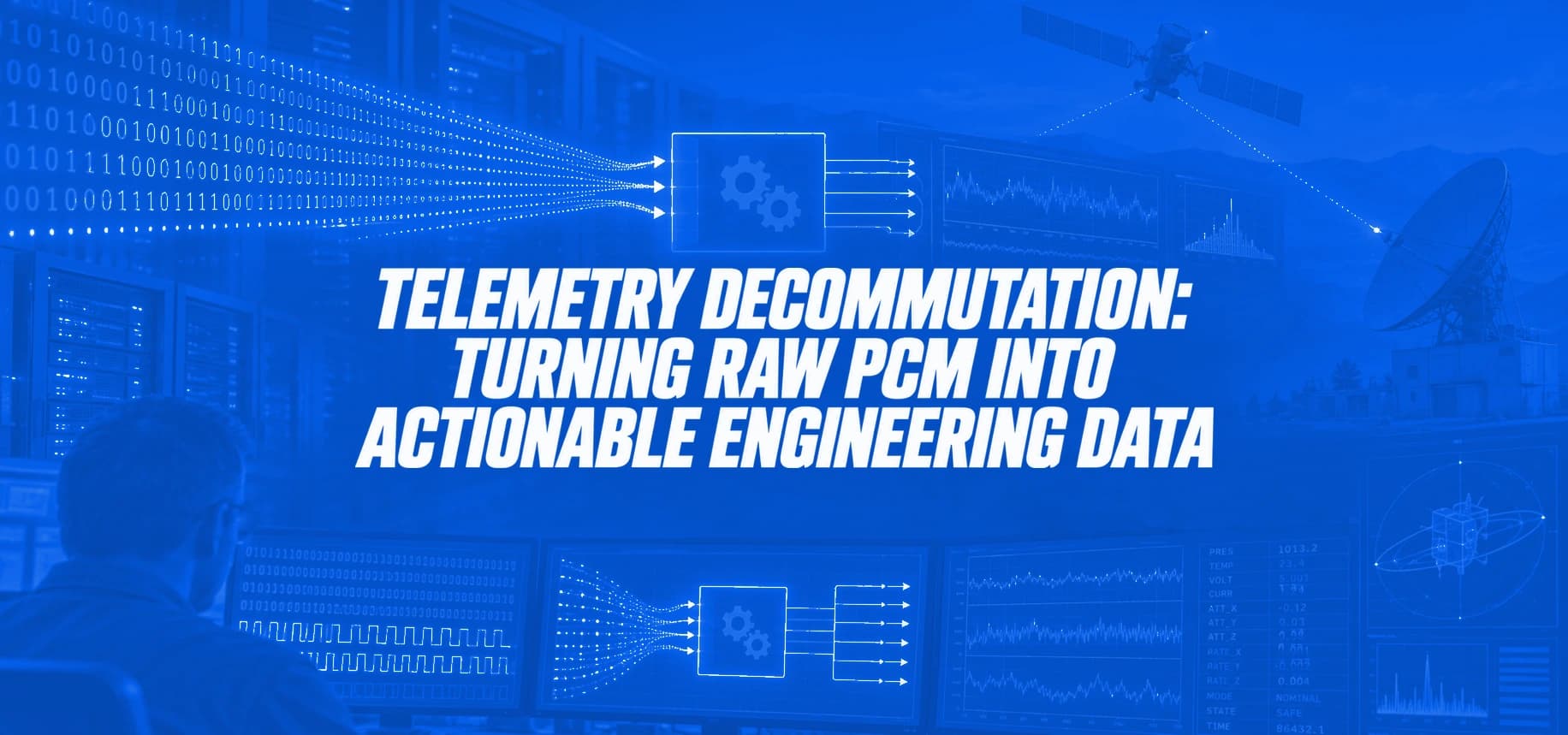
A key idea in data communications is telemetry decom or decommutation, especially when it comes to sending collected data back to a telemetry receiver from distant or unreachable sources.
This process enables us to interpret, analyze, display, and utilize data effectively, turning raw data into actionable insights.
Let us examine the components of telemetry decom and the reasons contemporary telemetry systems require it.
Telemetry decom refers to the breakdown of telemetry data into manageable, interpretable components or datasets. This is essential for several reasons. First, it makes the data easier for systems and analysts to handle and process. Second, it aids in identifying the specific parts of the data that are valuable for decision-making, thereby optimizing the data analysis process.
When we talk about telemetry data, we are generally referring to a wide array of signals and measurements transmitted from rockets, missiles, planes, and UAVs to data processing centers or ground control rooms. These could range from altitude or temperature readings on an aircraft to HD video coming down from a rocket going into space. Decomposing this data effectively ensures that every piece of data can be correctly interpreted and used.
The importance of telemetry decom cannot be overstated, especially in complex systems like satellite communications, deep-sea explorations, and high-speed telecommunications. By breaking down telemetry data into simpler, comprehensible units, engineers and technicians can troubleshoot issues, monitor system performance, and improve system designs more efficiently.
Moreover, telemetry decom is essential for improving data transmission reliability. It assists in removing errors and noise, which are frequently introduced during the data transmission process. This is important in applications where precision and accuracy are paramount, such as in aerospace and military operations.
Utilizing telemetry decom effectively brings numerous benefits:
Organizing data into structured components makes processing and analyzing quicker, leading to faster decision-making.
With a clear analysis, anomalies and errors can be spotted and rectified swiftly, enhancing the overall data integrity.
Well-decommutated telemetry data can be scaled up or down according to system requirements without losing out on data fidelity or operational quality.
Telemetry decommutation is not just a technical necessity; it is a strategic advantage in the competitive field of data communications.
By ensuring data is both accessible and interpretable, businesses and organizations can optimize their operations and propel themselves ahead.
As we continue to rely more on remote technologies, the importance of mastering telemetry decom will only grow. Let us not just collect data; let’s make it work for us.
Telemetry data refers to the continuous measurement and transmission of data from remote or inaccessible sources, often in real-time. This data can include various parameters such as temperature, pressure, speed, or any other measurable quantity relevant to the system being monitored. Which helps make quicker and more reliable real-time decisions.
Decommutation is the process of deciphering or decoding raw telemetry data into meaningful format that can be analyzed and understood by humans or computer systems. This process involves extracting relevant information from the raw data stream, parsing it according to predefined protocols or formats, and then displaying it in a usable form.
Yes, telemetry decommutation can be automated to some extent. Machine learning algorithms can be trained to identify appropriate decommutation techniques and perform the decom process on new data streams.
Validating the decom process through simulations or comparisons with known results helps ensure the accuracy of the decommutated data. Additionally, using high-quality, noise-free telemetry data minimizes errors in the decom process.
Powering secure, real-time data transmission across land, sea, and sky.
Dive into our blog for the latest trends, tips, and insights in the world of design and AI technology. Whether you’re looking for inspiration, tutorials, or industry news, our articles are crafted to keep you informed and inspired.

Parraid provides tactical communications solutions, telemetry data systems, and deployable communication products that support mission-critical operations around the globe. Below are some of the most common questions about our technology, services, and support.
Parraid works with aerospace, defense, government, and research organizations that depend on real-time data and secure communications. Our products are engineered to meet the unique operational needs of mission-critical and tactical environments.
Our telemetry data systems enable accurate data acquisition, recording, and playback across test ranges and aerospace applications. With IRIG-106 compliance and TMoIP support, we deliver precise insights for faster mission validation and system performance analysis.
Parraid’s tactical communications solutions are designed for interoperability and resilience. They integrate seamlessly with multi-band radios, SATCOM, and IP-based networks to maintain command, control, and situational awareness in any field condition.
Yes. Our deployable communication products are lightweight, ruggedized, and MIL-STD compliant, ideal for rapid setup and sustained connectivity in mobile or remote missions.
Absolutely. We work closely with our customers to design and configure systems tailored to their operational goals. Whether upgrading existing telemetry infrastructure or developing a fully deployable communication suite, we ensure seamless integration and lifecycle support.
All Parraid systems are designed, built, and supported in the United States. Our team of engineers and specialists provides continuous technical support to ensure mission reliability and customer success.
Connect With Our Team
All Parraid systems are designed, built, and supported in the United States. Our team of engineers and specialists provides continuous technical support to ensure mission reliability and customer success.
Powering secure, real-time data transmission across land, sea, and sky.

Parraid delivers mission-critical telemetry and tactical communications solutions designed to perform when failure is not an option.