Email : sales@parraid.com
Call Us : +1 (301) 690-0690

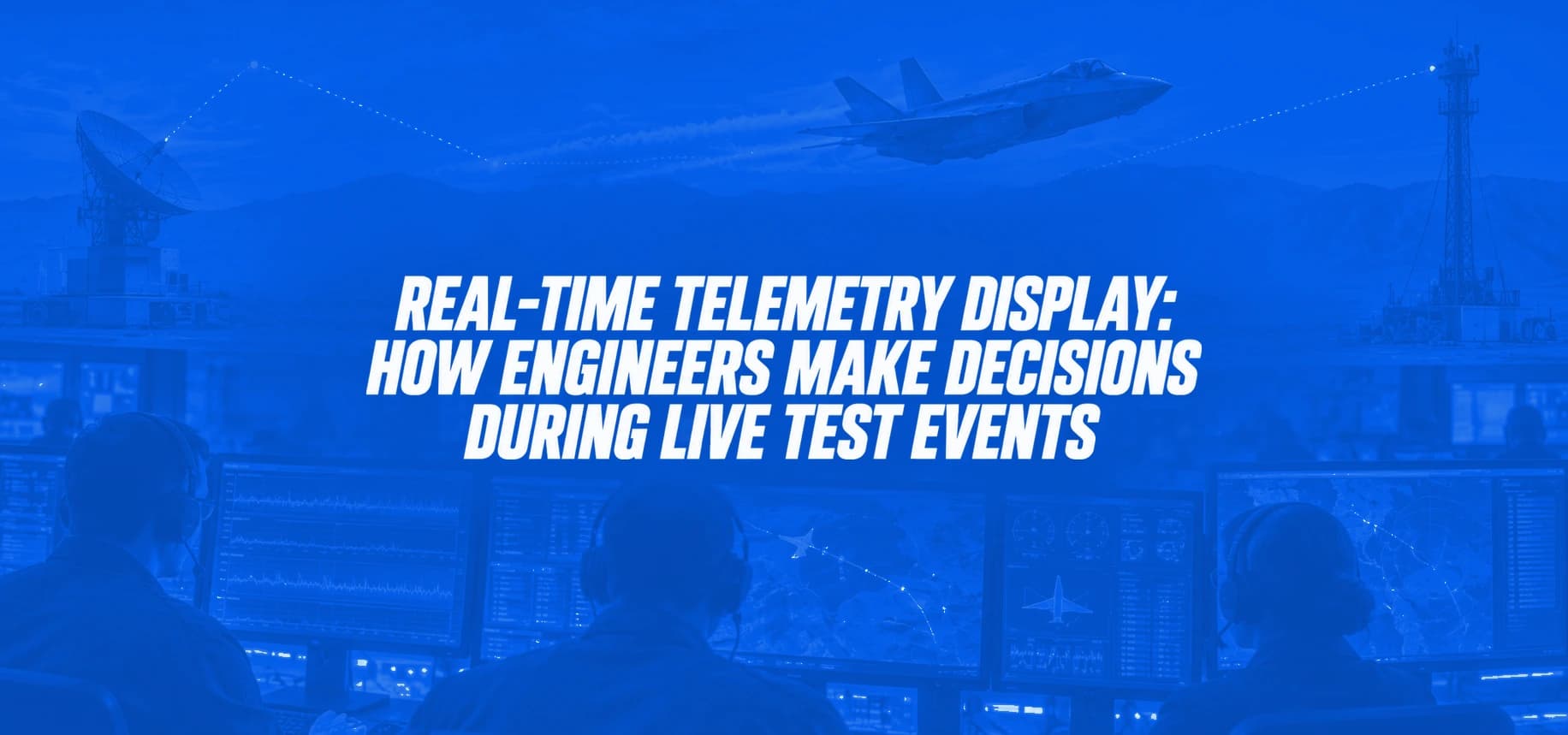
A test flight is a high-stakes information environment. The test conductor must simultaneously monitor the progress of the test card, track the health status of the test article, watch for safety limit exceedances, coordinate with the aircrews, and communicate with the range safety officer all in real time, as the events of the flight unfold. The quality of the real-time telemetry display system directly affects the test conductor's ability to perform all of these functions effectively. A display system that presents information clearly, without distraction, with appropriate alerting for off-nominal conditions, and with the parameter coverage needed for informed decisions is a genuine force multiplier for the test team.
A real-time telemetry display system receives engineering unit data from the processing chain, typically the output of a decom like the S-5000e working with OMEGA NExT processing software and presents it in a format that operators can interpret and act on in real-time. This presentation may include strip charts showing the time history of key parameters, digital readouts displaying current values with color-coded limit indicators, spatial displays showing aircraft position and flight path, and tabular displays showing the status of multiple parameters simultaneously, and video feeds or recordings that provide additional operational context and visual insight.
Parraid's OMEGA NExT software includes the Clarity display environment and Clarity Builder, a flexible visualization framework that allows test teams to create custom displays tailored to their specific test objectives. Engineers can build displays that show exactly the parameters relevant to the current test phase, arrange them in the most logical spatial relationships, and configure limit indicators with the appropriate thresholds for the current flight condition. Display configurations can be saved and shared, ensuring consistency across test days and between team members.
Modern test ranges frequently operate multiple simultaneous test articles or monitor both the primary test vehicle and a chase aircraft. The OMEGA NExT display environment handles multi-source data by presenting data from multiple simultaneous decommutation processes in a unified display, allowing operators to monitor the complete operational picture from a single workstation. This multi-source capability eliminates the need for separate display workstations for each monitored aircraft.
The most critical function of the real-time display system is limit monitoring: comparing parameter values against defined operational limits and alerting operators when limits are approached or exceeded. OMEGA NExT implements comprehensive limit monitoring with configurable alert thresholds and visual indicators that immediately capture operator attention when action may be required. This automated limit monitoring augments rather than replaces the experienced judgment of test conductors and range safety officers.
One of OMEGA NExT's key advantages is the seamless transition from real-time monitoring to post-flight playback. The same display configurations used during real-time monitoring are available for post-flight playback of recorded Chapter 10 data, providing an identical analysis environment for both modes. This consistency eliminates the cognitive overhead of learning a different tool for post-flight analysis and ensures that anomalies identified during post-flight review can be directly compared to the real-time experience. Explore OMEGA NExT or contact Parraid for a demonstration.
Powering secure, real-time data transmission across land, sea, and sky.
Dive into our blog for the latest trends, tips, and insights in the world of design and AI technology. Whether you’re looking for inspiration, tutorials, or industry news, our articles are crafted to keep you informed and inspired.
Parraid provides tactical communications solutions, telemetry data systems, and deployable communication products that support mission-critical operations around the globe. Below are some of the most common questions about our technology, services, and support.
Parraid works with aerospace, defense, government, and research organizations that depend on real-time data and secure communications. Our products are engineered to meet the unique operational needs of mission-critical and tactical environments.
Our telemetry data systems enable accurate data acquisition, recording, and playback across test ranges and aerospace applications. With IRIG-106 compliance and TMoIP support, we deliver precise insights for faster mission validation and system performance analysis.
Parraid’s tactical communications solutions are designed for interoperability and resilience. They integrate seamlessly with multi-band radios, SATCOM, and IP-based networks to maintain command, control, and situational awareness in any field condition.
Yes. Our deployable communication products are lightweight, ruggedized, and MIL-STD compliant, ideal for rapid setup and sustained connectivity in mobile or remote missions.
Absolutely. We work closely with our customers to design and configure systems tailored to their operational goals. Whether upgrading existing telemetry infrastructure or developing a fully deployable communication suite, we ensure seamless integration and lifecycle support.
All Parraid systems are designed, built, and supported in the United States. Our team of engineers and specialists provides continuous technical support to ensure mission reliability and customer success.
Connect With Our Team
All Parraid systems are designed, built, and supported in the United States. Our team of engineers and specialists provides continuous technical support to ensure mission reliability and customer success.
Powering secure, real-time data transmission across land, sea, and sky.

Parraid delivers mission-critical telemetry and tactical communications solutions designed to perform when failure is not an option.