Email : sales@parraid.com
Call Us : +1 (301) 690-0690

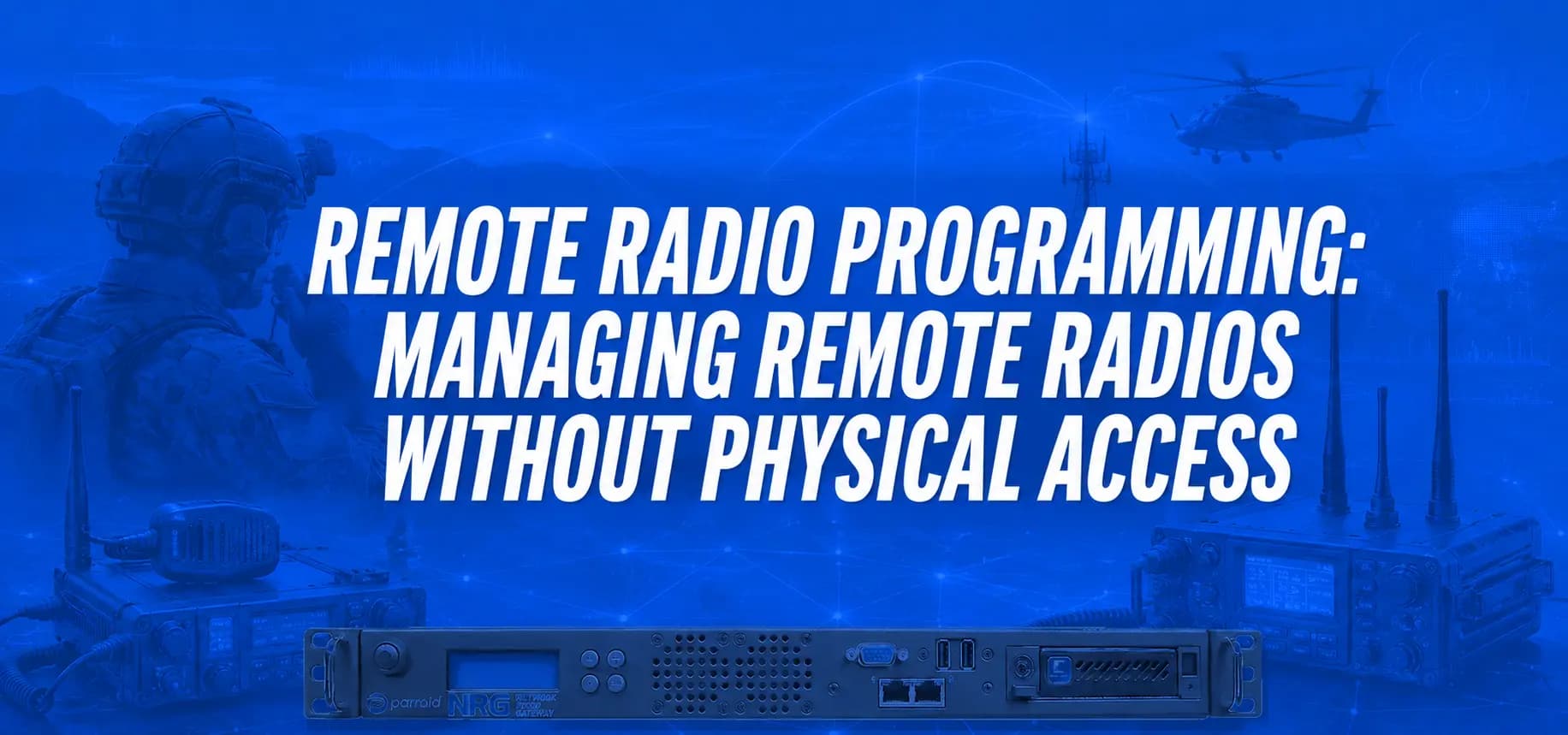
Military radio programming, loading frequency plans, COMSEC keys, waveform configurations, and operational parameters into tactical radios has traditionally required physical access to each radio. In garrison, this is merely inconvenient. In a tactical environment it can be operationally limiting, requiring logistics movements to bring programming equipment to dispersed radio operators, or requiring radios to be extracted from deployed forces for programming at a central location. Remote radio programming capabilities eliminate this limitation, enabling radio configurations to be updated over the network without physical access to the radio.
Remote radio programming is technically complex because tactical radios were not originally designed with remote management in mind. They may have limited network interfaces, proprietary programming protocols, and security requirements that constrain how programming data can be transmitted. Bridging between these legacy radio programming architectures and modern IP-based management systems requires a gateway that understands both the radio programming protocols and the IP network, and that can maintain the security of the programming data in transit.
The operational benefits of remote radio programming are substantial. Frequency plan changes can be pushed to all radios simultaneously, rather than requiring individual programming of each radio. COMSEC key updates can be distributed to dispersed forces without requiring couriers or key fill equipment to be physically delivered. New waveform configurations can be tested and deployed to operational radios without requiring their withdrawal from service. Configuration errors, an inherent risk of manual radio programming, can be detected and corrected remotely.
Parraid's Network Radio Gateway (NRG) provides the IP connectivity that enables remote radio programming in conjunction with compatible radio management systems. By connecting tactical radios to the IP network, the NRG enables radio management systems to communicate with radios across geographic distances, providing the connectivity that remote programming requires. The NRG deployable systems extend this capability to forward deployed locations.
Remote radio programming involves transmitting sensitive information, frequency plans, encryption keys, and waveform parameters over communications networks that adversaries may be monitoring. The security of this information requires end-to-end encryption of the programming data, authentication of the programming source to prevent adversaries from pushing malicious configurations, and audit logging of all programming activities to support security audits. Parraid's communications infrastructure supports these security requirements.
As radio systems become more software-defined and network-aware, the capabilities available for remote management will expand significantly. Future radio systems will support not just remote programming but remote monitoring, remote diagnostics, and even remote waveform updates that add entirely new capabilities without hardware changes. The IP communications infrastructure provided by Parraid's deployable communications portfolio will be the foundation on which these advanced remote management capabilities are built.
Powering secure, real-time data transmission across land, sea, and sky.
Dive into our blog for the latest trends, tips, and insights in the world of design and AI technology. Whether you’re looking for inspiration, tutorials, or industry news, our articles are crafted to keep you informed and inspired.

Parraid provides tactical communications solutions, telemetry data systems, and deployable communication products that support mission-critical operations around the globe. Below are some of the most common questions about our technology, services, and support.
Parraid works with aerospace, defense, government, and research organizations that depend on real-time data and secure communications. Our products are engineered to meet the unique operational needs of mission-critical and tactical environments.
Our telemetry data systems enable accurate data acquisition, recording, and playback across test ranges and aerospace applications. With IRIG-106 compliance and TMoIP support, we deliver precise insights for faster mission validation and system performance analysis.
Parraid’s tactical communications solutions are designed for interoperability and resilience. They integrate seamlessly with multi-band radios, SATCOM, and IP-based networks to maintain command, control, and situational awareness in any field condition.
Yes. Our deployable communication products are lightweight, ruggedized, and MIL-STD compliant, ideal for rapid setup and sustained connectivity in mobile or remote missions.
Absolutely. We work closely with our customers to design and configure systems tailored to their operational goals. Whether upgrading existing telemetry infrastructure or developing a fully deployable communication suite, we ensure seamless integration and lifecycle support.
All Parraid systems are designed, built, and supported in the United States. Our team of engineers and specialists provides continuous technical support to ensure mission reliability and customer success.
Connect With Our Team
All Parraid systems are designed, built, and supported in the United States. Our team of engineers and specialists provides continuous technical support to ensure mission reliability and customer success.
Powering secure, real-time data transmission across land, sea, and sky.

Parraid delivers mission-critical telemetry and tactical communications solutions designed to perform when failure is not an option.