Email : sales@parraid.com
Call Us : +1 (301) 690-0690


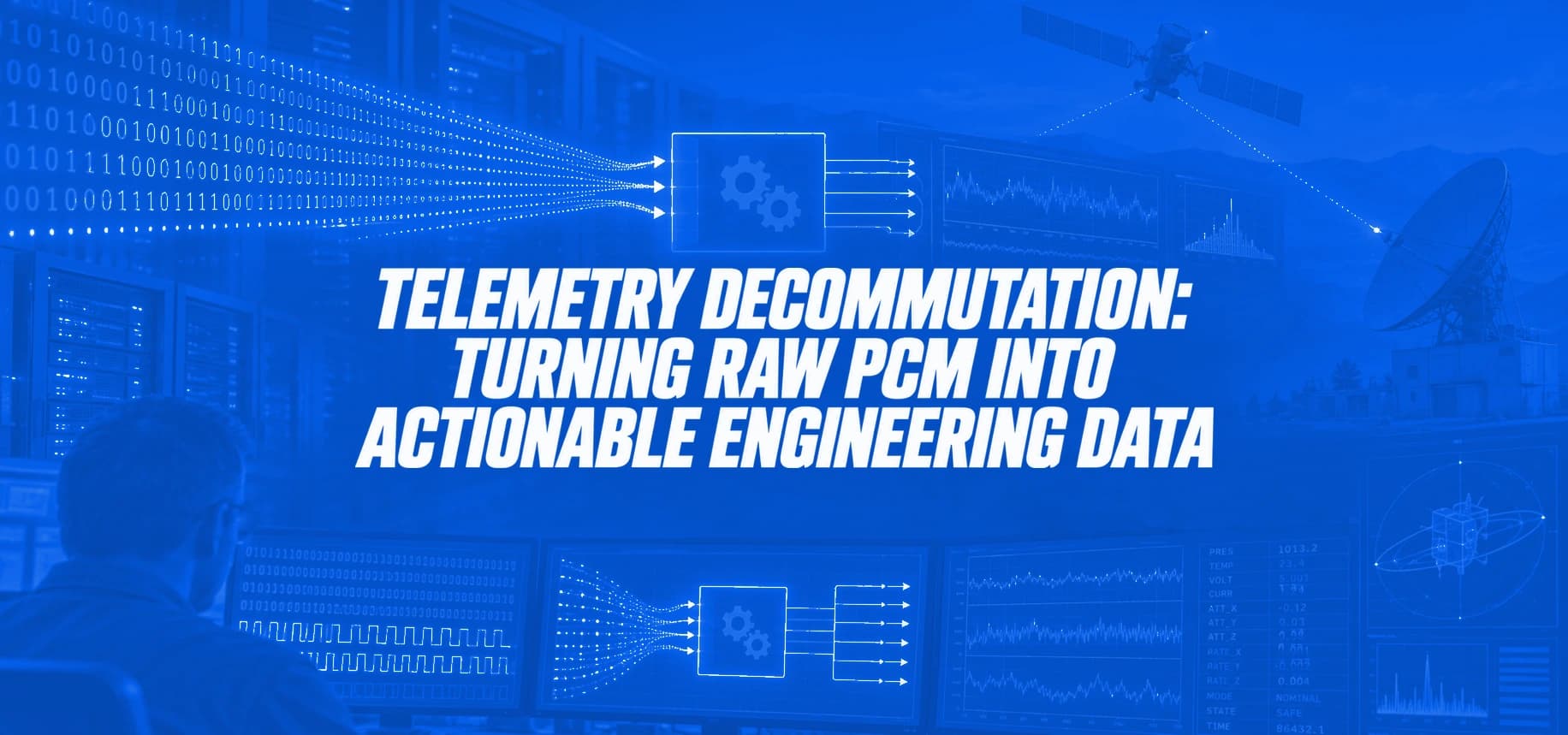
For most of its history flight telemetry involved getting data to the ground, then routing analog (TTL) clock and data signals around a building to get data to people requiring it in real-time. This was done through noisy electronic environments, required unique infrastructure, and limited the range of real-time data dissemination. Some equipment vendors found ways to transmit the data by converting to IP packets, then using existing Ethernet infrastructure to disseminate through any network-connect system.
In the early days, this method was ad hoc but became standardized in a brief time as the benefits were obvious. Today there several methods in play and they all fall under the term Telemetry-over-IP (TMoIP).
The first successful method was to take the existing “Chapter 10” packet standard—explained in our guide to IRIG 106 Chapter 10—and transmit each packet intact over IP using UDP or TCP. This method supports all Chapter 10 data types.
In 2010 a temporary standard was put in place to describe PCM data within a Universal Datagram Protocol (UDP) packet. However, this method neglected a time packet, making it impossible to correlate data accurately. This was remedied by a 2020 standard which incorporated the time of the sampled data. This method inserts PCM frame structure into a UDP without other data types being supported.
This follows the DARv3 protocols and supports UDP and TCP/IP, but it is not widely used or supported by all vendors in the US.
This new standard is fully a self-describing method which originates from the iNet concept. This method supports any data type within a UDP stream. This is not widely used as it is very new but will gain favor in time.
Any flight test facility that wishes to disseminate over a wide area of the range or to other ranges in real-time.
Since security infrastructures are already in place in almost all networks, this method requires only adherence to facility policies.
Yes, most vendors already support some or all of the above methods.
To implement TMoIP, an organization needs IP-capable telemetry equipment and access to a reliable IP network. Depending on the specific requirements, additional software or hardware may be necessary for integration and data management.
Powering secure, real-time data transmission across land, sea, and sky.
Dive into our blog for the latest trends, tips, and insights in the world of design and AI technology. Whether you’re looking for inspiration, tutorials, or industry news, our articles are crafted to keep you informed and inspired.

Parraid provides tactical communications solutions, telemetry data systems, and deployable communication products that support mission-critical operations around the globe. Below are some of the most common questions about our technology, services, and support.
Parraid works with aerospace, defense, government, and research organizations that depend on real-time data and secure communications. Our products are engineered to meet the unique operational needs of mission-critical and tactical environments.
Our telemetry data systems enable accurate data acquisition, recording, and playback across test ranges and aerospace applications. With IRIG-106 compliance and TMoIP support, we deliver precise insights for faster mission validation and system performance analysis.
Parraid’s tactical communications solutions are designed for interoperability and resilience. They integrate seamlessly with multi-band radios, SATCOM, and IP-based networks to maintain command, control, and situational awareness in any field condition.
Yes. Our deployable communication products are lightweight, ruggedized, and MIL-STD compliant, ideal for rapid setup and sustained connectivity in mobile or remote missions.
Absolutely. We work closely with our customers to design and configure systems tailored to their operational goals. Whether upgrading existing telemetry infrastructure or developing a fully deployable communication suite, we ensure seamless integration and lifecycle support.
All Parraid systems are designed, built, and supported in the United States. Our team of engineers and specialists provides continuous technical support to ensure mission reliability and customer success.
Connect With Our Team
All Parraid systems are designed, built, and supported in the United States. Our team of engineers and specialists provides continuous technical support to ensure mission reliability and customer success.
Powering secure, real-time data transmission across land, sea, and sky.

Parraid delivers mission-critical telemetry and tactical communications solutions designed to perform when failure is not an option.