Email : sales@parraid.com
Call Us : +1 (301) 690-0690


The Advanced Battle Management System, or ABMS, is the Air Force's contribution to the joint JADC2 architecture. Its answer to the challenge of connecting air, space, and cyberspace assets into a unified command and control network that can operate at the speed required to defeat peer adversaries. As the Air Force retires legacy systems and fields new capabilities, ABMS provides the connective tissue that links aircraft, satellites, ground stations, and command centers into a coherent operational network. Understanding ABMS is important for anyone working on systems that must interface with Air Force command and control infrastructure.
ABMS is conceived as a network of networks, not a single system, but an architecture that enables diverse Air Force and joint systems to share data, fuse information, and coordinate actions with minimal latency. The core ABMS functions include collecting sensor data from across the Air Force and joint enterprise, fusing this data into a common operational picture, distributing this picture to decision-makers throughout the force, and enabling the rapid command and control actions needed to respond to peer adversary threats.
ABMS is built on a cloud-based architecture that leverages commercial and government cloud computing infrastructure to store and process the enormous volumes of sensor data that flow through the system. Edge computing nodes extend the architecture to tactical environments where cloud connectivity may be limited, providing local processing capability that reduces the bandwidth requirements for connecting tactical users to the broader ABMS network. Advanced data standards and APIs enable new systems to connect to ABMS without bespoke integration work.
One of the practical challenges in ABMS implementation is connecting tactical forces who rely on conventional radio systems for local communications to the broader ABMS network. While next-generation waveforms and data links will eventually provide more direct connections between tactical radios and the ABMS architecture, the near-term solution relies heavily on radio gateway technology like Parraid's Network Radio Gateway (NRG) to bridge legacy radio networks into the IP-based ABMS transport layer.
ABMS is only as effective as the communications infrastructure that connects its users. For Air Force expeditionary operations, the rapid deployment to austere locations that defines how the Air Force projects power, the deployable communications infrastructure must be capable of connecting to the ABMS architecture immediately upon arrival at the operating location. Parraid's deployable communications solutions, including the PacStar 466, are designed for exactly this scenario, providing ABMS-compatible connectivity in a rapidly deployable package.
ABMS is a program in active development, with ongoing investments in new capabilities and continuous integration of lessons learned from operational demonstrations and exercises. The Air Force has identified ABMS as a central priority for future capability development, reflecting the recognition that command and control at the speed required for modern air operations depends on the digital infrastructure ABMS provides. For organizations developing systems that will interface with ABMS, understanding the architecture and connection requirements is essential. Visit Parraid's deployable communications page to learn more about compatible solutions.
Powering secure, real-time data transmission across land, sea, and sky.
Dive into our blog for the latest trends, tips, and insights in the world of design and AI technology. Whether you’re looking for inspiration, tutorials, or industry news, our articles are crafted to keep you informed and inspired.

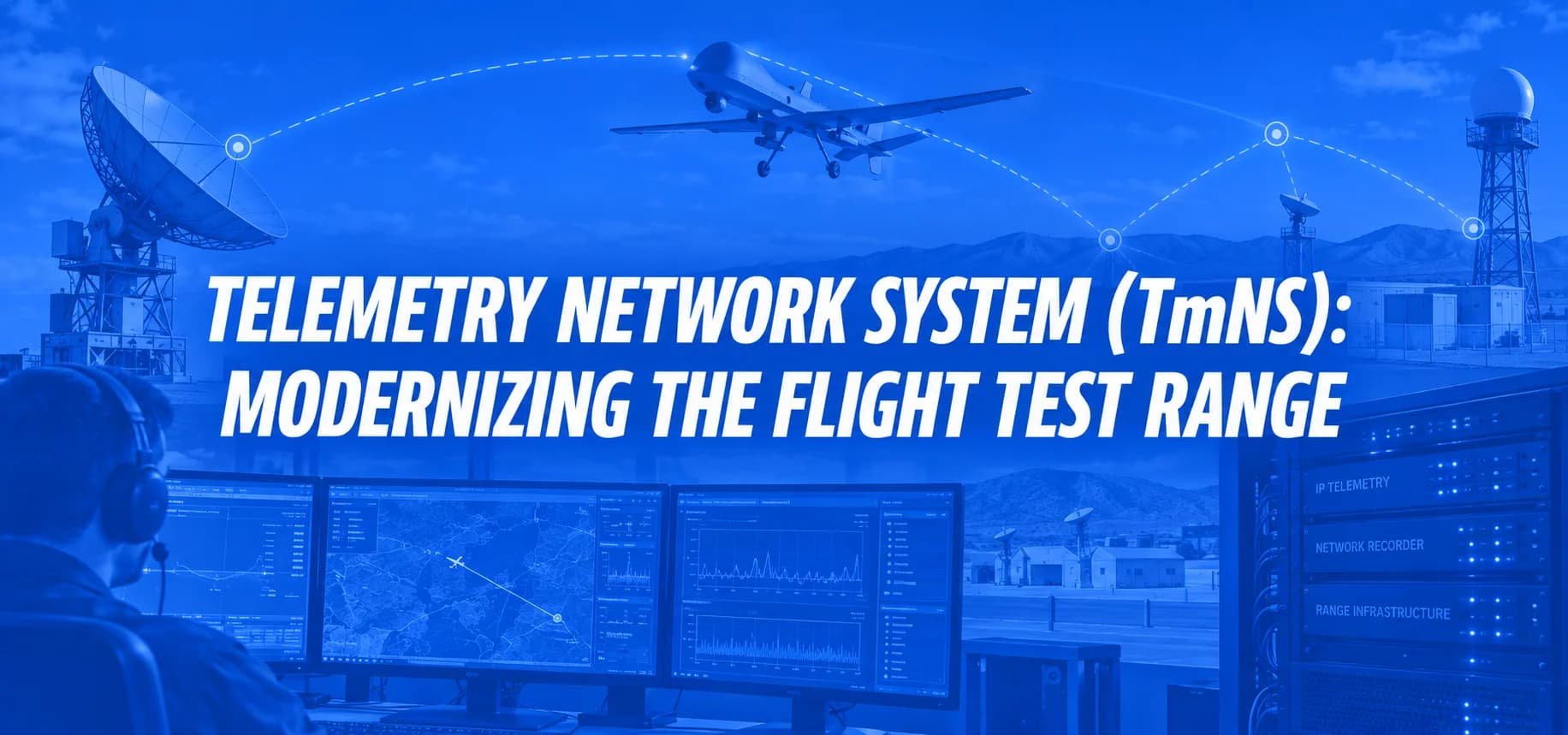

Parraid provides tactical communications solutions, telemetry data systems, and deployable communication products that support mission-critical operations around the globe. Below are some of the most common questions about our technology, services, and support.
Parraid works with aerospace, defense, government, and research organizations that depend on real-time data and secure communications. Our products are engineered to meet the unique operational needs of mission-critical and tactical environments.
Our telemetry data systems enable accurate data acquisition, recording, and playback across test ranges and aerospace applications. With IRIG-106 compliance and TMoIP support, we deliver precise insights for faster mission validation and system performance analysis.
Parraid’s tactical communications solutions are designed for interoperability and resilience. They integrate seamlessly with multi-band radios, SATCOM, and IP-based networks to maintain command, control, and situational awareness in any field condition.
Yes. Our deployable communication products are lightweight, ruggedized, and MIL-STD compliant, ideal for rapid setup and sustained connectivity in mobile or remote missions.
Absolutely. We work closely with our customers to design and configure systems tailored to their operational goals. Whether upgrading existing telemetry infrastructure or developing a fully deployable communication suite, we ensure seamless integration and lifecycle support.
All Parraid systems are designed, built, and supported in the United States. Our team of engineers and specialists provides continuous technical support to ensure mission reliability and customer success.
Connect With Our Team
All Parraid systems are designed, built, and supported in the United States. Our team of engineers and specialists provides continuous technical support to ensure mission reliability and customer success.
Powering secure, real-time data transmission across land, sea, and sky.

Parraid delivers mission-critical telemetry and tactical communications solutions designed to perform when failure is not an option.